
Lucinda Wright on continuity, combat and Liam Hemsworth’s new 'panther'-like Geralt in ‘The Witcher’
The Emmy-nominated costume designer breaks down how she protected Geralt’s signature silhouette while reshaping the jacket, texture and movement for Season 4.

In The Witcher, costume sharpens the story that the scripts set in motion. You register allegiance and status long before anyone utters a word of dialogue. Armor signals hierarchy. Leather records wear and repair. Silhouettes stay legible even when the frame is crowded with bodies, mud and steel. It is a show built on visual fluency, and few departments shape that fluency more directly than costume. That is why talking to Emmy-nominated costume designer Lucinda Wright feels essential to understanding how this world actually works on screen.
For anyone jumping in fresh, The Witcher is Netflix’s sprawling fantasy saga created by Lauren Schmidt Hissrich, adapted from Andrzej Sapkowski’s books. It follows monster hunter Geralt of Rivia as war, politics and destiny pull the Continent into constant upheaval. The series has anchored itself around monster hunter Geralt (now played by Liam Hemsworth, assuming the role originated by Henry Cavill, who departed the show at the end of Season 3), quarter-elf sorceress Yennefer (Anya Chalotra), and crown princess Ciri (Freya Allan). Wright’s work sits right in the middle of that storytelling, and her ethos is immediate when she talks about process. “Drawings are fine, but it doesn’t mean anything,” she told me. “With an actor, it’s better to put something on, so they can feel the weight of it.”
Season 4 brings a challenge the audience can see from a mile away: a new Geralt stepping into a silhouette that had already become iconic. Wright approached it by preserving key elements of the established look while recalibrating the costume around Liam Hemsworth’s physicality and movement. She remembers watching him walk down a corridor for the first time and thinking, “He’s silent, he’s like a panther.” That observation shaped the design. Wright kept the familiar trousers, boots, and silver-studded armour as anchors, then adjusted the cut and fit to give Hemsworth more freedom and fluidity. She incorporated an animal print into the leather of the jacket itself, subtle enough to read as texture rather than statement, reinforcing a sense of stealth and predatory control. The result holds continuity while letting this Geralt move differently through the world.
The deeper you go with Wright, the more you understand how much of The Witcher’s visual punch comes from practicality. She lives with the stunt department, studies previs, and designs for what bodies have to do on camera, especially when a fight scene needs flow rather than stiffness. She is constantly watching, constantly checking, because comfort and confidence show up in performance. If you can see “that look in their eye” that they are struggling, the costume has already failed the moment it hits the frame. That standard is why the show’s armor, boots and layered leather often feel like tools rather than decoration.
Then there’s the thing fans obsess over, for good reason: scale. The Witcher does battles with bodies, gear, mud, blood and repetition, and Wright is building multiples to survive that punishment while keeping continuity tight. She described plotting quantities before she starts, budgeting with intention and leaning on an agile team so the “money shots” land. When the breakdown work hits, she is chasing belief. “You’ve got to believe it,” she said, repeating the point with the force of someone who has watched fantasy fall apart the second it looks too clean.
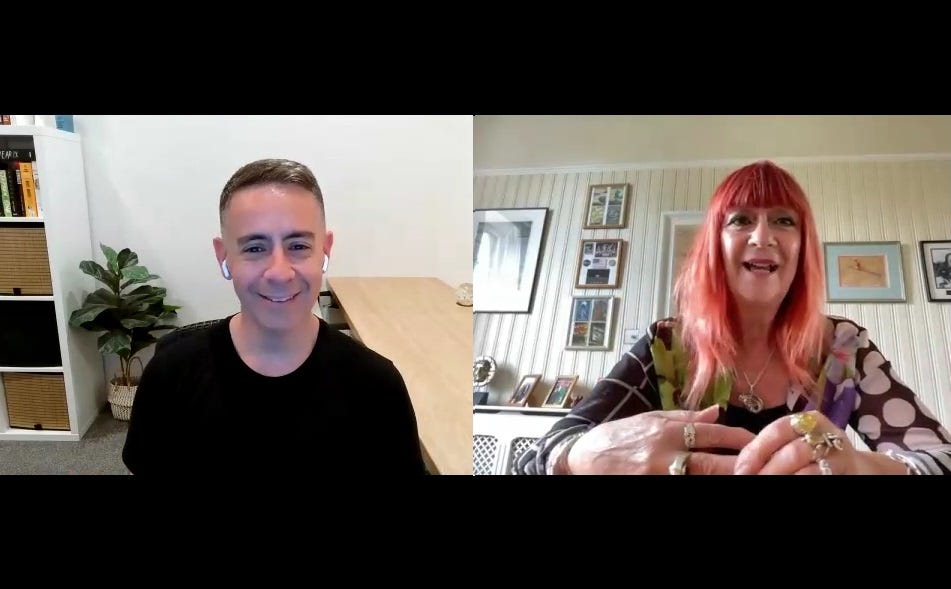
Watch the full conversation with Wright in the video interview below, then keep your eyes on the details she flagged: how costumes move, how factions read at a glance, and how texture tells you a character’s history without a line of dialogue. This is design that understands story, and treats every stitch like narrative:
Listen to the interview wherever you get your podcasts or listen here.
If you enjoyed this interview, hit subscribe, leave a comment, and share your thoughts. I’d love to know what you think.
Stay tuned for more conversations and new episodes of the podcast, where we go deeper into the stories shaping film, television and the people who bring them to life.