

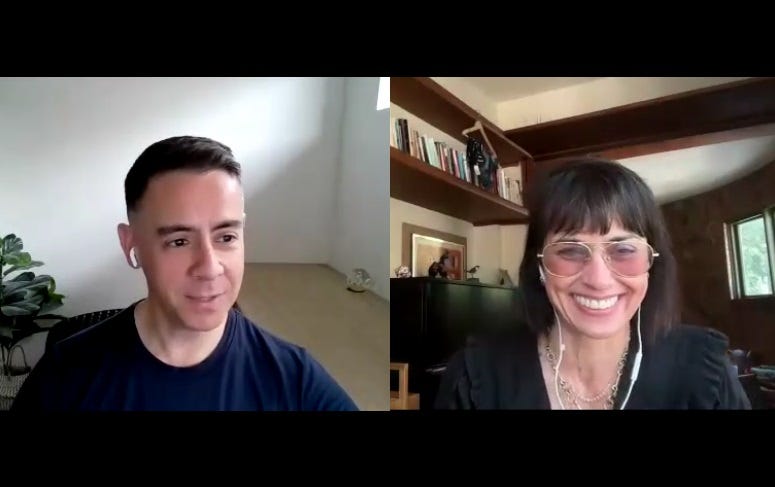
Few performances this year hit with the force of Constance Zimmer’s work in Love Story: John F. Kennedy Jr. & Carolyn Bessette. In the FX/Hulu limited series, Zimmer takes Ann Messina Freeman, the mother of Carolyn Bessette and her sister Lauren Bessette, and gradually becomes its emotional center of gravity. By the time the series reaches its devastating final chapter, Zimmer is carrying the memories and wounds of a family whose voice is too often overshadowed by the mythology around it. Speaking with Zimmer, what emerges is a deep affection for the role and a genuine sense of wonder at where the journey has taken her. “On paper, it was a fairly small part,” she tells me, before describing how the character’s impact and the Emmy recognition that followed still feel “so moving and emotional” to her.
Love Story explores the courtship and marriage of John F. Kennedy Jr. and Carolyn Bessette, two figures whose romance became woven into the fabric of American celebrity mythology. Produced within Emmy winner Ryan Murphy‘s television universe, the series revisits one of the country’s most intensely observed relationships, seeking to understand the people behind the cultural fascination that continues to endure decades later. The series stars Paul Anthony Kelly and Emmy nominee Sarah Pidgeon as John and Carolyn, with Zimmer earning her second career Emmy nomination for embodying Ann, a woman whose pain unfolds away from the spotlight that consumed those around her. What drew Zimmer to the role immediately was the opportunity to give life to somebody whose story had rarely been told. Reading the material, she felt Anne was “somebody’s voice that we had not heard, and that we had not known, and that we had not seen.”
That sense of responsibility runs throughout our conversation. Zimmer speaks beautifully about approaching Ann as a real person rather than a historical figure to be imitated. With little archival material available beyond photographs and written accounts, she focused on understanding Ann’s character, particularly the strength, humor and resilience that surfaced in accounts of her life. “People didn’t know her, and didn’t think about that part of the story,” Zimmer says, reflecting on the opportunity to finally give the Bessette family perspective equal emotional weight. The result is a performance that feels startlingly lived-in. Zimmer describes allowing herself complete emotional freedom during filming: “this role gave me the opportunity to have no fear of expression,” she says.
Perhaps the most moving part of our discussion centers on what she hopes audiences take away from the work. Reflecting on the raw grief that defines Ann’s final scenes, Zimmer explains that she wanted viewers dealing with their own losses to feel seen. “I wanted it to hopefully give people that space to finally feel like they could just release this emotion,” she says. As Love Story reaches its conclusion, the series broadens from a tale of celebrity romance into something richer and more human, lingering with the mothers, daughters and survivors left to carry the memory forward. Zimmer understands exactly why that matters. “You see the importance of women who age through trauma and grief, love and life,” she says. It is that understanding that gives Anne such extraordinary resonance and why Zimmer’s work remains one of the year’s best performances.
Watch the full conversation below:
Listen to the interview at Apple Podcasts, Spotify or wherever you get your podcasts.
Clips courtesy of FX Networks and Hulu.
See also:
➤ 20 Emmy nominations! An incredible first year for artists featured at Awards Heaven
If you enjoyed this interview, hit subscribe, leave a comment, and share your thoughts. I’d love to know what you think.
Stay tuned for more conversations and new episodes of the podcast, where we go deeper into the stories shaping film, television and the people who bring them to life.